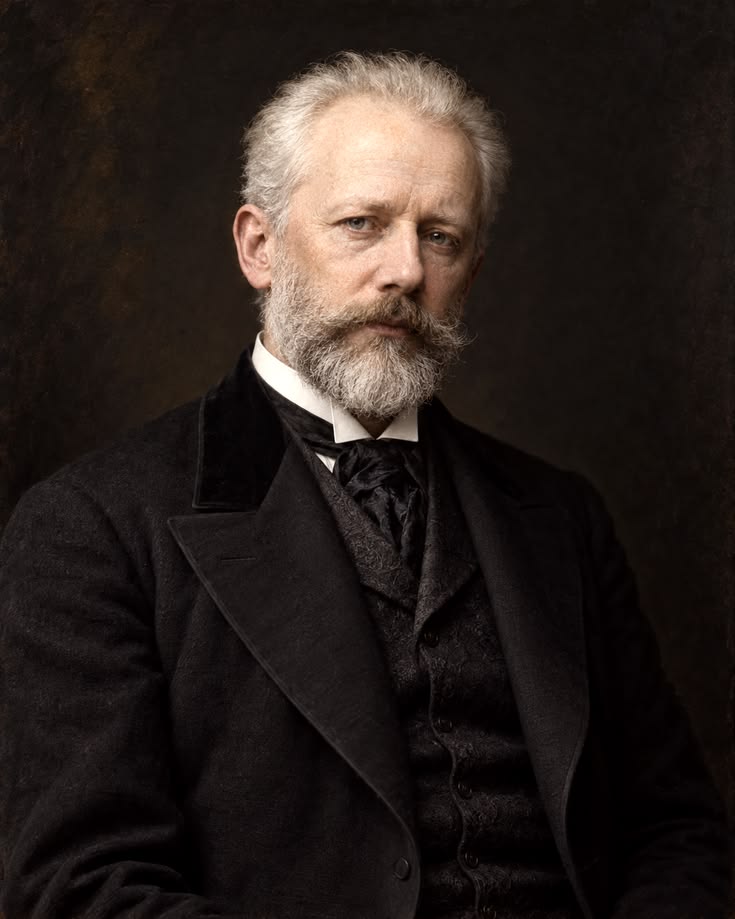
Tchaikovsky was a major composer of the 19th century, renowned for his dramatic music, highly emotive melodies and enormous contributions to the development of classical ballet. His music remains some of the most familiar in the classical repertoire and is performed in major concert halls and theatres all over the world. A number of his works, ‘Swan Lake’ and ‘The Nutcracker ‘, for instance, are enormously significant to the modern musical world. Tchaikovsky was a composer of a period when Russia was undergoing enormous political and cultural change, and the impact of his music was not confined to just Russia. His ability to convey such intense emotion through the use of sophisticated musical structure is what has cemented his status as one of the greats of the Romantic period.
On the 7th of May 1840, Tchaikovsky was born in a small town inside the Russian Empire. He was from a rather well-off family. His father was a mining engineer. He first got an introduction to music from his mother, who was able to play the piano. So, at an early age, he was exposed to music. Quickly, he showed a liking for music and started taking piano lessons at the age of 5. He soon showed a high level of talent. Unfortunately, back then, it was not considered a viable option for a career, in terms of both earning money or acquiring social status. Therefore, he was sent to study at the Imperial School of Jurisprudence in Saint Petersburg, and was trained for an administrative career.
Once he’d completed his studies, Tchaikovsky went to work as a clerk in the Ministry of Justice. He slowly started getting frustrated with his life and wanting to pursue his passion for music professionally. So he then went to the newly created Saint Petersburg Conservatory to study. There he studied musical theory, orchestration, and the art of composition. Anton Rubinstein, a respected pianist and composer, was one of his most noteworthy teachers there. Tchaikovsky graduated in 1865 and became a professor of harmony at the Moscow Conservatory the following year. With that, he could have a stable income while developing his skills as a composer.
From the very beginning, Tchaikovsky had his own distinct musical voice. His music was a mixture of the Western classical tradition and Russian characteristics. Whereas some of his countrymen were very much intent on creating a distinctly national sound, Tchaikovsky was quite the opposite in that he was deeply influenced by the West. Mozart, Beethoven and Schumann were all composers he greatly admired, and their influence can often be heard in his music. There is, of course, a very pronounced Russian flavour in his melodies and his emotional expression as well. It was this combination of the two which gave his music such a wide appeal in Europe and beyond.
He was a composer of feelings really, of yearning, of uncertainty, of sadness and of excitement. Rather than depending on the complexity of the music per se, Tchaikovsky would often use a very memorable melody, underpinned by a rich harmonic texture and a very carefully considered orchestration. All of his orchestral work was, to his mind, a demonstration of a very fluent command of all the instruments in the orchestra. He knew how to bring the brass, the percussion, the strings and the woodwinds into play together to create a wide variety of textures.
One of the areas in which his contribution was most significant was in the field of ballet. Ballet had previously been seen as little more than accompaniment for the dancers. Tchaikovsky did a great deal to change that perception with a number of scores which really did establish ballet as music in its own right. His first major ballet, Swan Lake, was written from 1875 to 1876. It had a disappointing introduction in Moscow at the time but has since become one of the most famous ballet scores of all time. It’s a score of delicate music with some very dramatic passages, and tells the story of Prince Siegfried and Odette, a princess who is turned into a swan by a wicked spell.
His second major ballet was The Sleeping Beauty, which premiered in 1890 at the Mariinsky in St. Petersburg. It described a traditional fairy tale, and featured some of his most intricate orchestration (the waltz in Act I being an example). His last ballet was The Nutcracker, which was first performed in 1892. It was a mixed bag in terms of reception, but memorable melodies and the use of quite unusual instruments to create a magical atmosphere were all factors in its success. It is now a ballet which is performed all over the world.
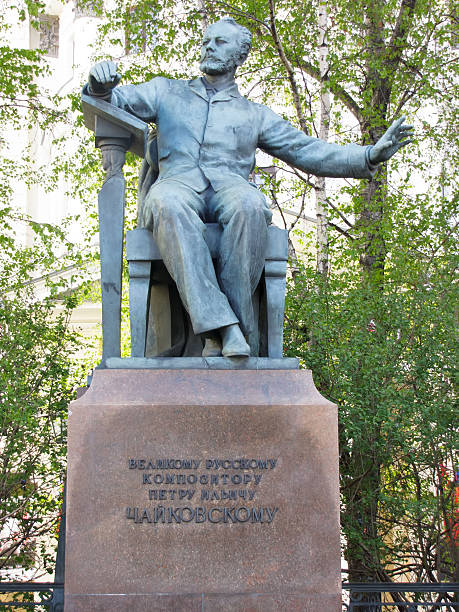
Tchaikovsky’s personal life was complicated to say the least, and he experienced several periods of emotional worry throughout his career. In the year 1877, he married Antonina Miliukova, a former student of his. But the marriage soon became an unhappy one and ended in their separation. At around the same time, he began to receive financial support from a wealthy widow named Nadezhda von Meck, who was an admirer of his music. It was an interesting relationship between the two, as although they had numerous communications through letters, they never actually agreed to meet in person. The money allowed Tchaikovsky to leave his teaching position and focus more on music. This continued for years until their correspondence ended abruptly in 1890.
Tchaikovsky died on the 6th of November, 1893, at the age of 53. His death was at a time when his name was beginning to be known even internationally. The exact circumstances of his death are debated, though the most commonly accepted reason is cholera. Even so many years after his death, his music has become central to the classical repertoire of today. His mastery of emotional expression and instrumental sophistication has made his compositions truly extraordinary.


Leave a Reply