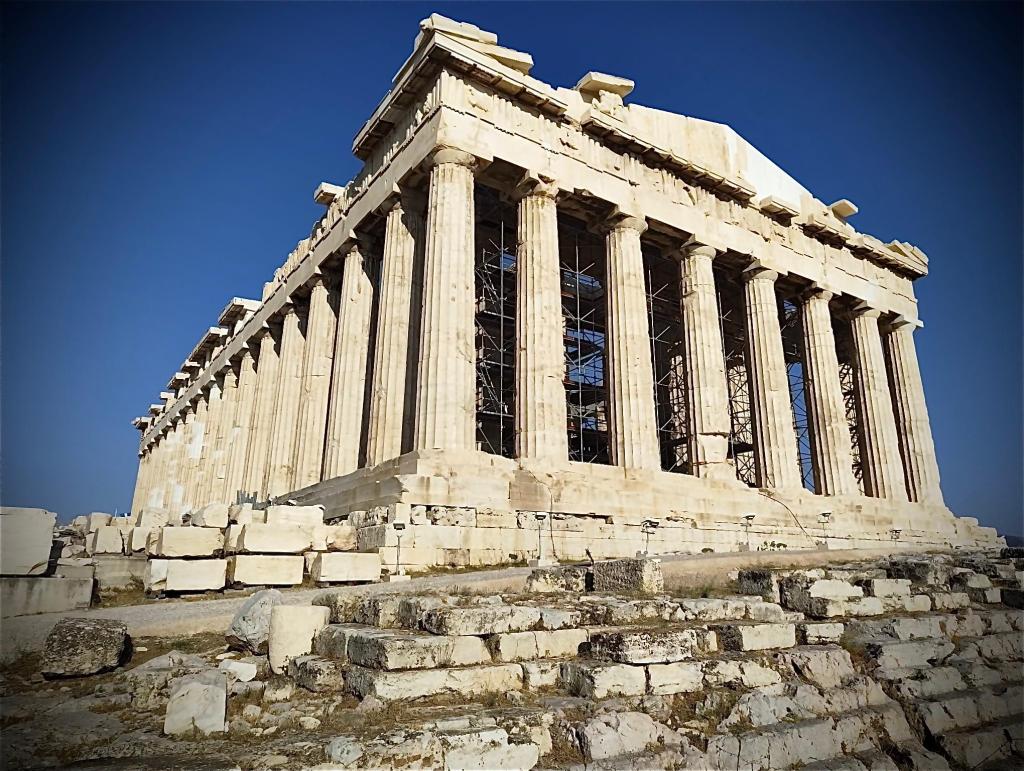
The Parthenon stands proudly atop the Acropolis of Athens. It is one of the most famous buildings in the world, having been built more than 2,400 years ago. This magnificent temple has withstood wars, earthquakes, and centuries of political changes. Today, it serves as a powerful reminder of Ancient Greece, a testament to its art, democracy and architecture.
More than an impressive collection of marble columns, the Parthenon also reveals the beliefs and achievements of those who built it. From its construction in the golden age of Athens to its transformation into a church, mosque, and archaeological monument, the building has remained a fundamental part of human history.
The Parthenon was constructed in the 5th century BCE, in a time when the city of Athens was one of the most influential powers on the planet. Construction began somewhere around 447 BCE, under the leadership of Athenian statesman Pericles. By 432 BCE, the construction was mostly completed.
The temple itself was dedicated to Athena, patron deity of the city, and goddess of wisdom and courage. According to the tales believed by the Greeks, Athena became the protector of the city after winning a contest against the sea god Poseidon. Since then, its prosperity has been regarded as being linked to the goddess.
The Acropolis is a rocky hill that overlooks Athens, and is where the Parthenon was built. The elevated position allows it to dominate the city’s skyline. Additionally, the location also connects it to several other important religious buildings in the area, such as the Temple of Aphaia and the Temple of Poseidon. Together, the three make up the Sacred Triangle of Greece, forming a near-perfect isosceles triangle.
In the modern age, the Parthenon is often described as being the greatest surviving achievement of Classical Greek architecture. Its designers, the architects Ictinus and Callicrates, created a building that appears simple at first glance, but in fact contains a large variety of mathematical sophistication.
The primary material used in its construction was Pentelic marble, quarried from Mount Pentelicus near Athens. The designs follow the Doric architectural order, recognisable by its sturdy columns and relatively simple capitals. Elements of the Ionic order were also imbued in the building as well.
One rather interesting feature is that its lines are not fully straight. The columns, for example, are subtly curved and lean inwards. The floor also rises slightly towards the centre. From a distance, these all help to make a visual impression of perfect balance.
Furthermore, the columns themselves are slightly thicker when you move closer towards the middle, a feature called entasis. Without these, to the human eye, straight columns would appear to curve inwards. As a result, the builders were careful to make these adjustments.
Once upon a time, the Parthenon was decorated with an enormous number of sculptures. Many were created under the supervision of Phidias, a Greek sculptor and artist generally regarded as one of the best of the ancient world.
One of his most famed works is the colossal statue of Athena, which once stood inside the temple. It was approximately 12 metres tall, and was made up of gold and ivory. Unfortunately, it is one of the many historical artefacts that we do not know the location of. It was likely destroyed in the tumultuous eras that passed.
The exterior of the temple was also richly decorated. Scenes depicting scenes from Greek mythology, such as battles between gods and giants, were shown through sculptures and carvings.
However, the Parthenon did not remain a dedicated temple to Athena forever. As political and religious circumstances changed, so did the purpose of the temple.
During the early Christian period, the Parthenon was made into a church for the Virgin Mary. Centuries later, after the Ottoman conquest of Athens, the building was then converted into a mosque. For much of its history, therefore, the Parthenon continued serving as a place of worship for significant religious figures.
In the year 1687, during a conflict between Venetian and Ottoman forces, one of the most devastating points in the Parthenon’s history occurred. The Ottomans were using the building to store gunpowder when a Venetian bombardment struck it. The resulting explosion caused immense damage, destroying much of the central structure and contributing to the ruined condition we see today.
There were also other events that caused the diminishing of its original look. In the early 19th century, the 7th Earl of Elgin, Thomas Bruce, removed a large number of architectural pieces from the Acropolis. These were eventually transported to Britain and eventually became part of the collection in the British Museum.
For many years, the Greek government has insisted that the sculptures should be returned to Athens, but the museum maintains the argument that the works were acquired legally and hence belong to them. The dispute has become one of the most well-known cultural debates in the world, and raises broader questions on the treatment of removed ancient artworks and how objects obtained in those periods should be treated.
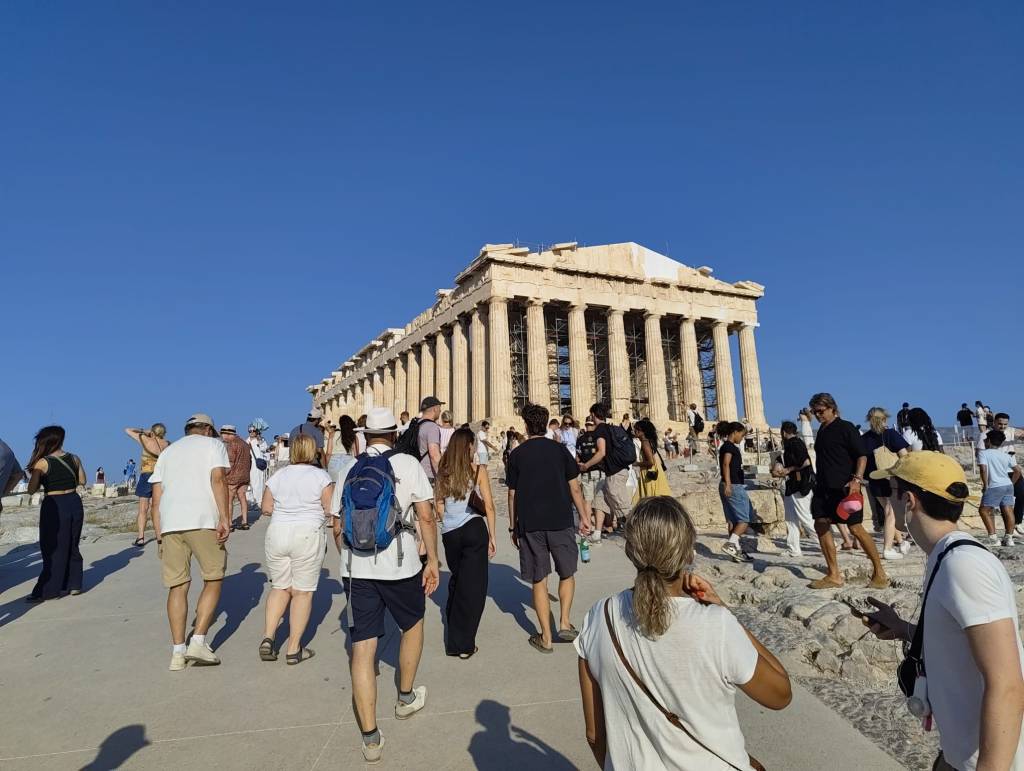
Millions still visit the Acropolis each year to see the remains of the temple and experience the landscape of Athens.
Preservation of the Parthenon is a challenging task. Centuries of weathering, increasing pollution, earthquakes and human activity have all affected the monument. Today, advanced technology and detailed research are used to protect the remaining marble and damaged sectors.


Leave a Reply