Blood and Rebellion
Few names from ancient history resonate as strongly as Spartacus. He wasn’t a king, a senator, or a conqueror in the traditional sense. He didn’t commission grand temples or leave behind volumes of philosophy. And yet, over 2,000 years later, he remains one of the most compelling figures of the Roman world.
Spartacus was born around 111 BCE in Thrace, a rugged region that spanned parts of what is now Bulgaria, Greece, and Turkey. He may have served in the Roman auxiliary forces at one point, but for reasons lost to history, he eventually ended up enslaved. The Romans, ever fond of making entertainment out of violence, sent him to a gladiator training school in Capua.
These schools were more brutal than disciplined—less Olympic camp, more state-sponsored Hunger Games prep. Gladiators were expected to fight and die for public amusement. Most did. But not Spartacus.
In 73 BCE, along with around 70 fellow gladiators, Spartacus escaped from the school. The story goes that they seized kitchen knives and spit-roasting tools to make their initial break, which, if true, adds a certain irony to Rome’s finest soldiers being outwitted by men armed with cutlery.
The escape wasn’t just a dash for freedom; it sparked the Third Servile War, the most serious slave uprising in Roman history. Spartacus and his group retreated to Mount Vesuvius (yes, the same volcano that would later destroy Pompeii) and began attracting more followers—runaway slaves, rural laborers, and even a few disillusioned Roman citizens. Within a few months, their numbers reportedly swelled to over 70,000.
Rome, at first, underestimated the rebellion. The Senate sent poorly equipped militias, expecting a quick and decisive victory. They were wrong. Spartacus and his fighters used their intimate knowledge of Roman tactics—and a bit of unconventional warfare—to outmanoeuvre their opponents. They didn’t fight like a formal army. They fought like people who had everything to lose and no intention of going quietly.
What’s especially striking is that Spartacus was not seeking to conquer Rome. His early victories weren’t followed by an assault on the capital but by attempts to escape Italy altogether. His goal seems to have been to cross the Alps and allow his followers to disperse back to their homelands. But here’s where reality complicated things: many of those following Spartacus didn’t want to leave. They wanted to stay, continue raiding the wealthy Roman countryside, and keep the rebellion alive. Whether by group consensus or disorder, the march to freedom turned into a prolonged campaign on Roman soil.
The Romans eventually stopped treating the uprising as a nuisance and started treating it like a national emergency. In 71 BCE, they turned to Marcus Crassus, one of the wealthiest and most ambitious men in Rome. Crassus was given command of eight legions—some 40,000 men—and instructed to end the rebellion once and for all.
Crassus was ruthless. He revived the ancient punishment of decimation, executing one in every ten of his soldiers in units that had shown cowardice. He also built an enormous ditch and wall—spanning over 30 miles—to trap Spartacus in southern Italy.
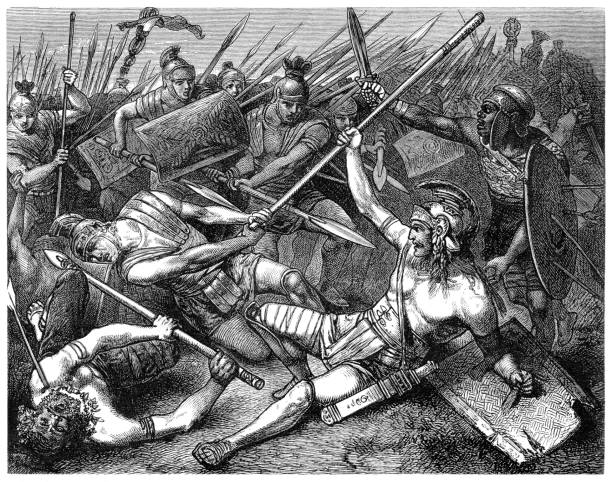
Spartacus made one last push. He broke through Roman lines and attempted to move north, but Crassus caught up with him near the Siler River. There, Spartacus made his final stand. Ancient sources describe him fighting bravely, reportedly killing several Roman soldiers before being overwhelmed. His body was never recovered, which only added to the legend.
After the battle, Crassus crucified 6,000 captured rebels along the Appian Way—the road from Capua to Rome. The message was unmistakable: defy Rome, and this is your fate.
And yet, for all their power and cruelty, the Romans could not erase Spartacus from memory.
He remains a symbol of resistance—of an enslaved man who defied one of the most formidable empires in history. He wasn’t a general trained in elite Roman schools. He had no Senate backing, no naval fleet, and no supply chain. What he had was determination, strategic skill, and an uncanny ability to inspire others.
In the end, Spartacus did not overthrow Rome. But he did something else—something almost as remarkable. He reminded the world that even in an age of cruelty and empire, one man’s refusal to submit could inspire tens of thousands to rise. His rebellion may have ended in blood, but his legacy endured far beyond the reach of any Roman sword.
 Chronicles of History
Leave a comment