The Wise Man
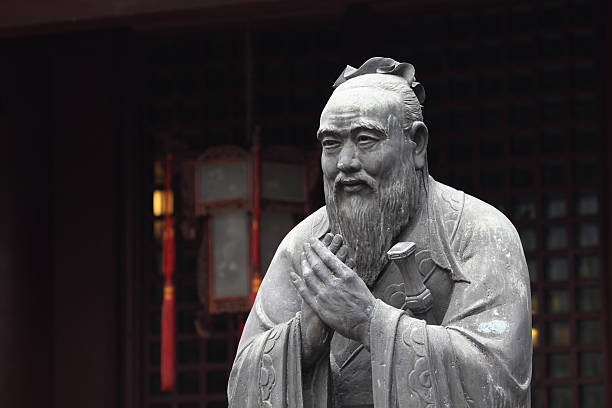
Confucius — a name that echoes across millennia, usually followed by a quote meant to sound profound, wise, or just plain funny. You’ve probably heard one of those joke quotes like: “Man who stands on toilet is high on pot.” Yeah, Confucius didn’t say that — unless he was making a surprise stand-up debut in the afterlife. The real Confucius was a philosopher whose sayings forged civilisations and educated emperors, and remain relevant today — even in a world where people have raging online arguments about whether pineapple belongs on pizza.
Confucius (or Kong Fuzi, “Master Kong”) was born in 551 BCE in Lu, Shandong Province, China. Even though we can now imagine ancient China as full of dragons, silk gowns, and peaceful gardens, the reality of his time wasn’t anything like that. Confucius was born during the Spring and Autumn Period, a sub-period of the larger Eastern Zhou Dynasty (770–256 BCE), and trust me, it was a political nightmare.
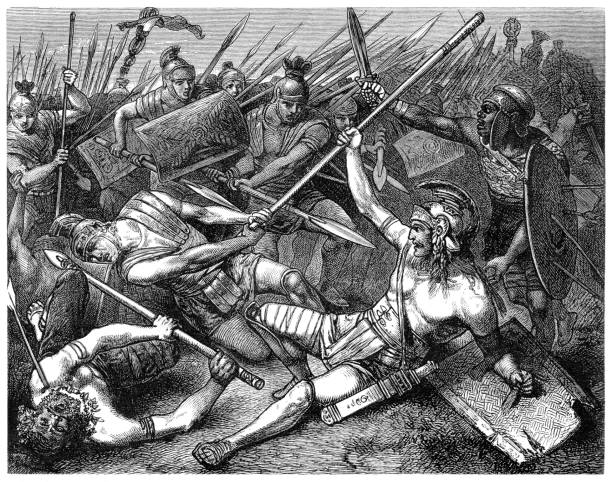
The Zhou kings continued to reign nominally, but their power had degenerated into a mere title. Real power lay in the grasp of feudal lords, battling one another for additional land, riches, and power. China was not a unified empire — it was a disunited collection of states, governed by its ambitious leader. Warfare was a lifestyle, and loyalty was fleeting. Coalitions broke up, cities were plundered, and the traditions that had maintained society intact were unravelling.
Confucius grew up watching this chaos. Rather than picking up a sword and rushing into battle, he picked another kind of warfare: an intellectual war. He wanted to restore order, decency, and virtue — not by violence, but by education, morality, and the resumption of important rituals.
The heart of Confucian thought is ren (仁), sometimes translated as humaneness, benevolence, or goodness. Laws alone, said Confucius, weren’t sufficient to establish a just community. You could coerce people to comply through threats of punishment, but when men acted to do good things – from within out – only then existed true harmony. He envisioned an existence in which citizens obeyed not just as duty-bound individuals, but in which men exercised virtue and empathised with each other simply because it was what one was meant to do.
He also emphasised filial piety — the deep respect for one’s elders and parents — which he felt was the solution to broader social harmony. If you learned to respect your family, you could apply those same principles in society, community, and leadership. It was as if starting with the foundation stones of good conduct in the home and scaling it up to a country level.
But here’s the catch: nobody listened to him. Confucius traveled from court to court for years, peddling his philosophy to kings and monarchs. He hoped that if he could convince one wise leader to adopt his moral code, the whole kingdom might be transformed. To no avail, rulers weren’t especially interested in virtue — they were more interested in holding office, disposing of rivals, and raising armies.
Most of the time, Confucius would provide his carefully considered advice, get a polite nod, maybe a free meal, and then be abruptly dismissed. In a world governed by war and dynastic conflict, evangelising about being nice was a tough sell. But Confucius did not give up. He continued to teach, gaining a small but loyal following who chronicled his maxims.
And it’s there, in that collection of sayings, dialogues, and ideas his students gathered after he passed away, that The Analects are. This text would be the foundation for Confucianism, a system of belief that would influence not just China but most of East Asia for the next two millennia.
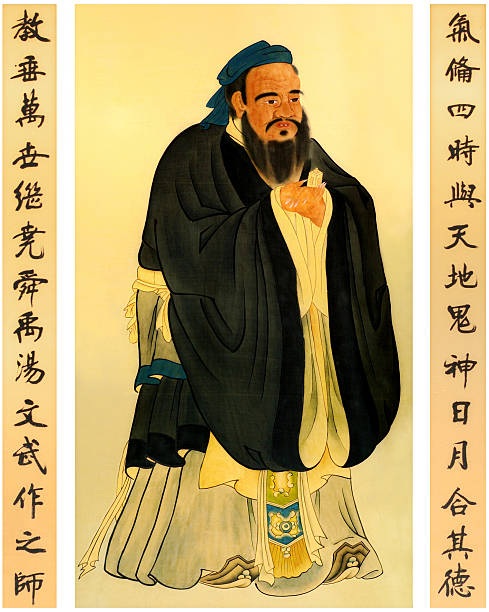
That’s when the real plot twist kicks in: though rulers of his time spurned him, coming generations would sanctify him. Confucianism eventually became the state ideology of the Chinese state, most notably under the Han Dynasty. For centuries, if you wanted to become an imperial Chinese government employee, you didn’t need political sponsors — you needed to read Confucian texts. Civil service exams were based largely on his doctrines. Confucius became the protector of social mobility and bureaucratic success.
His influence reached every sphere of society — from household to imperial court. Education, loyalty, ritual, and moral development became pillars of government. Even today, in modern China, Korea, Japan, and Vietnam, traces of Confucian thought continue to shape values of family, respect, and education.
So, who was Confucius? Not just a wise old sage with mystical aphorisms. He was a reformer, an educator, and a visionary who was courageous enough to challenge the status quo — not with guns, but with ideas. He believed that even in the darkest times, humanity could be redeemed by self-cultivation, compassion, and responsibility.
In short: while warlords fought bloody battles, Confucius battled with hearts and minds. And even though his revolution wasn’t swift, it was enduring. In a world that continues to struggle with inequality, greed, and isolation, maybe his message — decency starts at home and radiates outward — is timelier than ever.
 Chronicles of History
Leave a comment