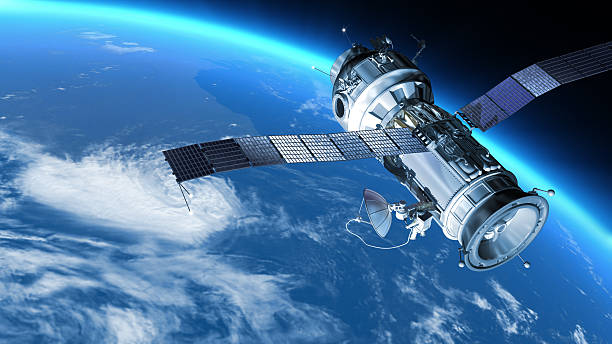
The Cold War’s highest frontier
The Space Race was a significant conflict between the two great superpowers of the time, the US and the Soviet Union. Rather than soldiers and weapons, it was a battle fought with intellect, technology, and a relentless drive to prove dominion of the expanse above us.
World War 2 had shown many things. One of these was the sheer necessity for developing rocket technology, which was abundant in missile technology. As both countries began developing intercontinental ballistic missiles, it soon became apparent that this tech could achieve heights never reached before (literally). Soon, a race had begun.
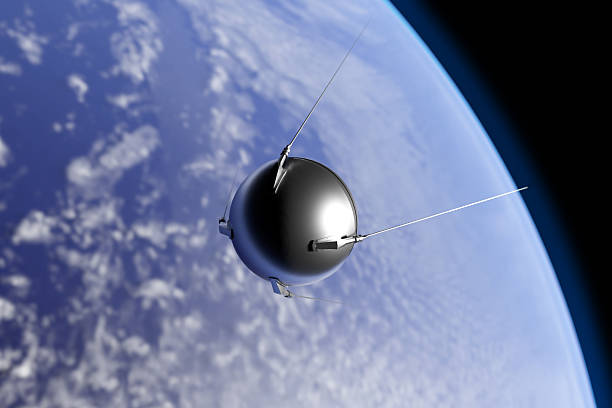
Fast forward to the 4th of October, 1957. Near the small town of Baikonur in Kazakhstan, an extraordinary feat was in progress. Sputnik 1. A shiny orb developed by the Soviet Union that became the world’s first artificial satellite. It was a shock to the US intellects and the general masses, and an unanticipated source of awe and fear at Soviet technological capabilities. They were now in dire need of a prompt response. This comeback was found in the launching of Explorer 1, the US’s first successful satellite. Explorer 1 was crucial in investigating radiation belts, providing necessary data on Earth’s space environment. Following this launch, President Dwight D. Eisenhower established NASA, the National Aeronautics and Space Administration to be at the forefront of space investigation in the US.
The point at which the race truly began heating up was in 1961 when Soviet Cosmonaut Yuri Gagarin became the first human to ever travel into space. Aboard Vostok 1, Gagarin’s flight was a resounding success and an epic milestone, one which had the US trailing far behind. The trip wasn’t just an astounding display of technology, but a direct provocation to the American sense of superiority. As a result, in the same year, President John F. Kennedy announced that America would have a man land on the moon before the end of the decade itself. This audaciously bold statement set the stage for the most ambitious and dangerous space missions in history.
And so began the Apollo Missions: a multibillion-dollar effort aimed at landing mankind on the surface of the moon. There were multiple setbacks, struggles, and doubts enveloping the whole project. These included the tragic deaths of three astronauts in a launch pad fire, technical problems, and several unanticipated delays. Despite this, the project gradually began to gain momentum, and in July 1969, what was deemed impossible just a decade ago was achieved. Humanity had set foot on the moon. Neil Armstrong and Buzz Aldrin became the first of our kind to walk on the grey surface above. As Armstrong said ‘One small step for man, one giant leap for mankind’, millions watched across the world. With this, the US had proved itself the most recognized victor of the Space Race. However, the legacy of these actions went much further than just satisfying national pride.
Over the next few years, numerous other missions to the moon were completed, with Apollo 17 in 1972. To date, this is the last time that humans have gone to the moon. Though the Soviets ultimately did not land one of their cosmonauts on the moon during this period, their contributions to the advancements of space travel are undeniable.
Space exploration today is marked by significant refinements and growing international cooperation. In the next few years, NASA’s Artemis program plans to return humans to the moon, with long-term plans of establishing a lunar colony atop this distant land. China has also made impressive strides in this field, with multiple successful lunar missions and Mars exploration, and has launched its space station, Tiangong into orbit. Meanwhile, the rise of space tourism, with companies like Blue Origin and Virgin Galactic, is making space more accessible to the general public.
International collaboration remains crucial, with the International Space Station (ISS) serving as a key example of countries working together on scientific research. However, challenges such as space debris are becoming more pressing, and efforts to develop solutions are underway. As space exploration evolves, the lessons of the Space Race continue to inspire global efforts to push the boundaries of what’s possible in space.



 Chronicles of History
Leave a comment