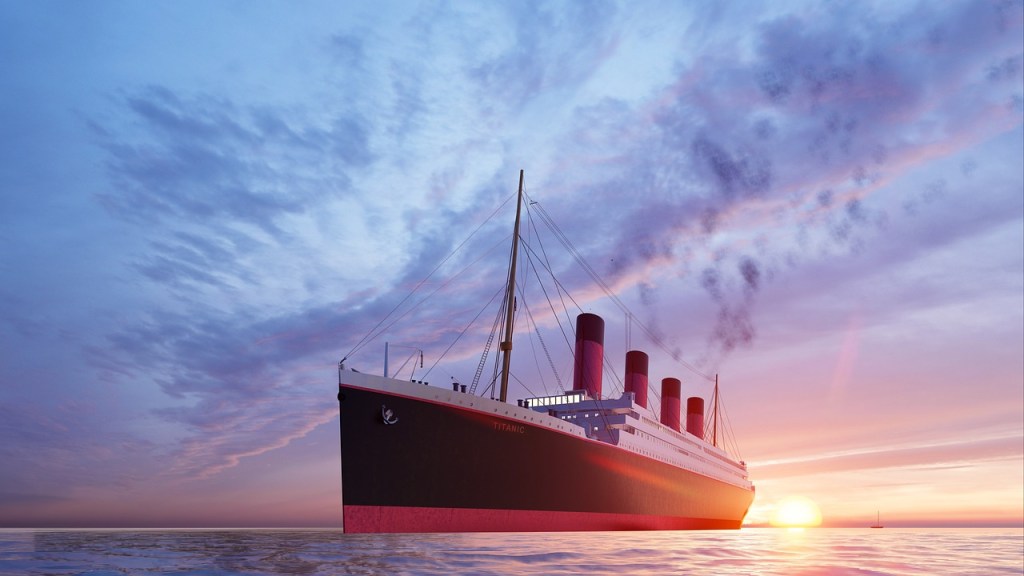
An unsinkable tragedy
On the night of April 14th, 1912, the Titanic, the so-called ‘unsinkable’ ship, proved to be anything otherwise. Just 4 days into its much anticipated maiden voyage, the largest and most luxurious ocean liner of its time met its rather undignified ending at the bottom of the North Atlantic Ocean.
The Titanic resulted from man’s obsession with size, speed, and excess. Built by the White Star Line to outshine its rival Cunard Line, the Titanic was the second of three Olympic-class ships. At 882 feet long and over 175 feet tall, it was an absolute behemoth of the seas. The boat accommodated swimming pools, a Turkish Bath, a squash court, and some of the most lavish interiors ever witnessed aboard a ship. The first-class guests had the pleasure of personal maids and French cuisine, whilst even the least influential boarders had a bed and ample food – which alone can be considered a luxury.
White Star’s marketing department went slightly overboard with their advertising (no pun intended). Claims of the ship’s invincibility spread far and wide, and even though the company technically never said the ship was ‘unsinkable’, it never discouraged it either. Some overly ambitious folks claimed that even God himself could not sink this craft, which in hindsight is probably not the best thing to say before launching into an ocean full of icebergs.

On April 10th, 1912, the Titanic set sail from Southampton, making stops in France and Ireland before positioning for its final destination: New York City. With over 2200 souls on board, most of whom were of the highest social echelons, the boat was a floating palace. Mother Nature, however, had other plans.
Four days into the voyage, the ship began receiving warnings of icebergs being ahead. One might think to slow down a bit. Unfortunately, this thought was not too significant for the crew on board. The Titanic continued cruising at nearly full speed ahead. At 11:40 pm, a lookout named Frederick Fleet spotted an iceberg in the ship’s path, and bellowed the not famous word ‘Iceberg, right ahead!’.
The crew immediately began to try steering away, but it was too late. The colossus of metal scraped along the side of the iceberg, and while it didn’t rip open like a tin can, it did something far worse— multiple punctures on the compartments below the waterline. The design of the ship meant that it could survive four flooded compartments. The world had, however, played a cruel joke, with five being compromised. In a matter of minutes, the ship’s fate had been sealed.
At first, most passengers weren’t too concerned. The Titanic was a fortress, after all. Even after it was clear that water was flooding in at an alarming rate, there was still a sense of disbelief among the passengers. By the time reality had sunk in, chaos had engulfed the ship.
The biggest problem? Lifeboats. There were only 20 – enough for about half the occupants on board. Why so few? Because the designers had thought thought more lifeboats would make the decks look too cluttered. To make matters worse, many lifeboats were launched in panic without their full number of people, with some carrying only a dozen when they could hold up to 65.
Meanwhile, the onboard band played on. Led by Wallace Hartley, cheerful tunes were created to boost spirits, even when the deck tilted at increasingly uncomfortable angles. They went down with the ship, a final testament to their dedication.
By 2:20 in the morning, the Titanic had broken apart and slipped beneath the waves, taking over 1,500 beings with it. The survivors, mostly women and children, were left stranded in the freezing waters until the RMS Carpathia arrived hours later.
The world was in shock. The greatest vessel ever built had just been reduced to nothing in just a few hours. Investigations done by both the Americans and British found a whole cocktail of errors – overconfidence, a lack of binoculars for lookouts, poor emergency planning, and an unwillingness to slow the ship down despite a multitude of warnings about icebergs.
This disaster led to significant changes in maritime safety. Lifeboat requirements were overhauled, ships were needed to maintain constant communications, and to monitor iceberg threats, the International Ice Patrol was established. Though tragic, the Titanic’s demise greatly increased safety for future voyages.
Today, we find the Titanic 12,500 feet below the ocean surface, slowly being consumed by rust-eating bacteria. If there’s one thing to take away from all this, I suppose it’s that if people are telling you there are icebergs ahead, maybe – just maybe – slow down a bit.

 Chronicles of History
Leave a comment