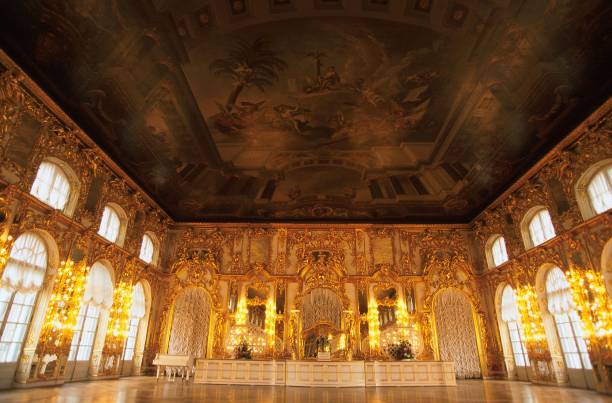
A chamber of gold
Few missing treasures in history match the mystique of the Amber Room, a shimmering jewel of a chamber that once stood in the Catherine Palace near St. Petersburg. Crafted from several tonnes of amber and gold leaf, this baroque masterpiece was once considered the eighth wonder of the world—until it suddenly vanished without a trace during World War II. So what exactly happened, and why has this treasure remained hidden for nearly 80 years?
The Amber Room was far more than just a room; it was an artistic and engineering marvel as ornate as they come. Designed in the early 18th century by German sculptor Andreas Schlüter, it was then crafted by Danish amber specialist Gottfried Wolfram. In 1716, Prussian King Frederick William I gifted the entire room to Peter the Great of Russia, cementing their diplomatic alliance.
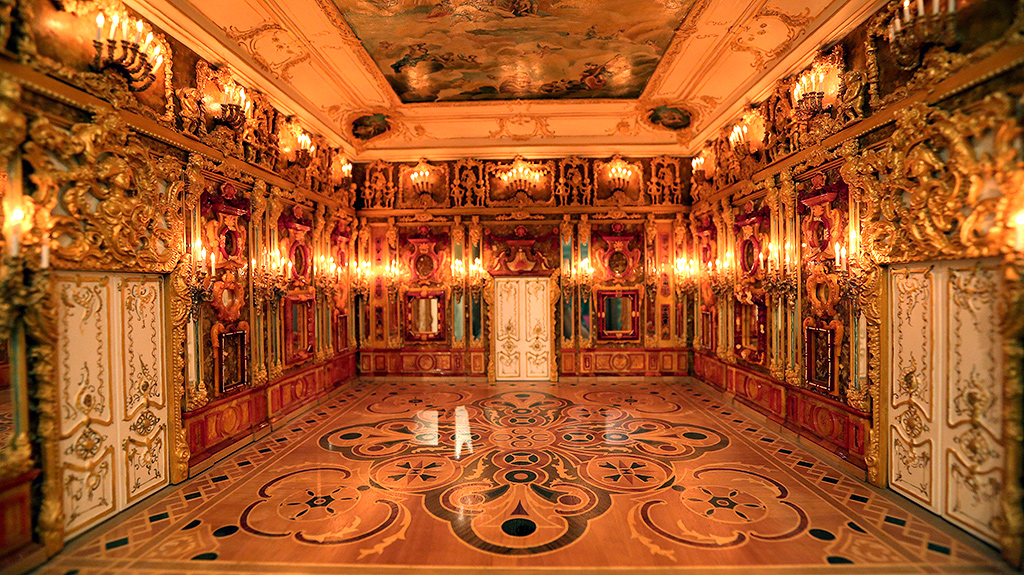
Once in Russia, the room was expanded and installed in the Catherine Palace. When completed, it covered nearly 180 square feet and contained around six tonnes of amber panels, intricate mosaics, and candlelit reflections. To those in the palace, the room shone like a golden fantasy: a beautiful symbol of Russian imperial grandeur.
Skip ahead to 1941. The Soviet Union was invaded by Nazi Germany, and Russian territory was relentlessly taken over by German troops. Fearing the Amber Room would be a prime target, palace curators attempted to dismantle the panels. However, amber is fragile; with no other option, they covered the entire room in wallpaper to hide it. Unfortunately, the ruse failed to fool the Germans.
Within 36 hours, the Nazis had pried apart the entire room and shipped it to a German city on the Baltic. There, it was reassembled in Königsberg Castle. But after 1944, the Amber Room simply vanished.
So where did it go? Like all missing relics, its fate remains a mystery. The most widely accepted theory is that the room was destroyed in the 1944 Allied bombing of the city. The castle was reduced to rubble, and many believe the fires consumed the Amber Room inside.
Others argue that the Germans, realising defeat was imminent, packed the room into crates and hid it—perhaps in salt mines, underground bunkers, or even at the bottom of the Baltic Sea. Some prefer a more dramatic take, speculating that Nazi officers smuggled the Amber Room to South America. It’s even possible that fragments exist in private collections, hidden from the world.
Despite decades of searches by treasure hunters, theorists, and even entire governments, no definitive evidence of the Amber Room’s survival has been found. The hunt continues to this day. In 2017, divers discovered a sunken Nazi ship, the Karlsruhe, off the Polish coast. Since it had departed Königsberg before its demise, some speculated that the Amber Room may have been aboard—but no trace was found.
However, an Amber Room does exist today. In 2003, Russian artisans painstakingly recreated it using historical documents and photographs. The project took 24 years and cost over $11 million. The result? A breathtaking replica in the Catherine Palace. Though not the original, it offers a glimpse into what once was.
Whether hidden in a long-forgotten vault or lost in the ashes of war, the Amber Room remains one of history’s greatest treasures. The search will undoubtedly go on, and if we’re fortunate, the chamber of gold may one day be shown to the world once again.



 Chronicles of History
Leave a comment